

When a Bank Built a Chief of Work (By Accident)
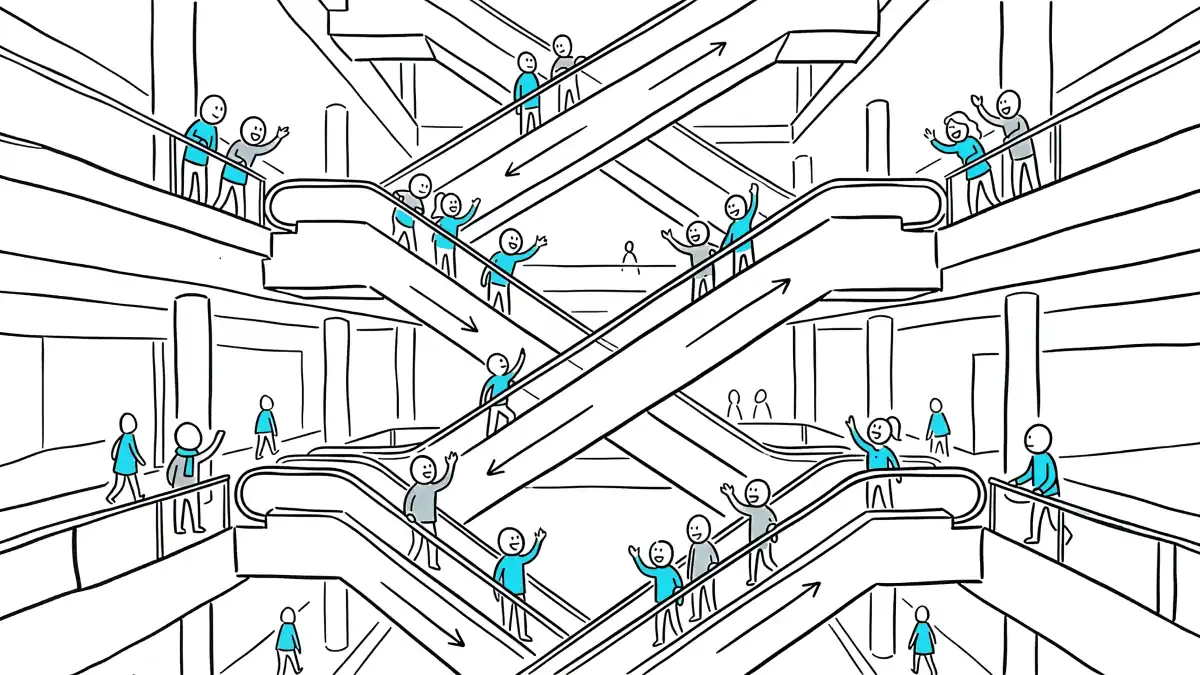
Inside a Toronto conference center, a cross-functional team of BMO execs were wrestling with a single question:
What must BMO do over the next two years to leverage our move to the new urban campus as a catalyst for driving innovation, collaboration, and creating industry-leading employee and customer experiences?
The year was 2019, and I was there as a WeWork provocateur, invited to challenge assumptions about how place impacts culture. I was watching a bank rewire how work happens, not just redesign where it happens.
Today, BMO is facing some challenging headlines and headwinds. Years ago, they were heading toward a Chief of Work without realizing it, which is why the story still matters.
Successful organizational transformation often lives in moments, not monuments. So I reminisced with Lynn Roger, BMO’s former Chief EX Officer, and Janet Dodge, a former Workplace Experience leader on her team, to capture some lessons learned from the inside.
Lead Across the Lines of Modern Work with Phil Kirschner
Over 22,000 professionals follow my insights on LinkedIn.
Join them and get my best advice straight to your inbox.
The Chief of…What?
First off, Lynn’s job title kept changing as her mandate evolved:
- Chief Talent Officer
- Chief Transformation Officer
- Chief Employee Experience Officer & Global Head of Workplace Transformation
When she first left HR to lead the enterprise transformation office, Lynn's mandate was unclear. The CEO and COO asked her to determine if bank-wide transformation efforts were creating sustainable value.
The initial priority was to drive efficiencies, optimizing expense ratios as banks often do. Lynn had participated in similar programs in the past but wanted to do things differently this time around: drive efficiencies by changing how the work was actually done. She explained:
The problem with organizational change with targeted reductions is that we don't take the time to determine how the work will change, if it should, or if we should stop doing it entirely. We often eliminate roles, but don’t consider how the work will be done thereafter.
That was the foundational mindset as Lynn started building a Chief of Work function without knowing it.
In her final role at BMO, Lynn brought elements of HR, IT and Real Estate that impacted the employee experience directly together, as opposed to keeping them in their traditional organizational silos.
That's why I wanted her story.

Finding Friction
In the early days of her transformation office, Lynn interviewed 75 leaders across the bank, asking a single question: “What's getting in your way?”
One answer was a notoriously sluggish and despised enterprise process that caused projects to stall while waiting for funding. But nobody had the actual or perceived authority to improve it.
Lynn made a bold promise to fix it in 90 days, and asked for change agents from all teams involved. She wanted “the top people, with opinions.” They redesigned the process together, and templatized the approach for tackling other imperfect processes like onboarding.
Assembling a cross-functional team of people who rarely worked together was a boon for driving change. "The time it takes to go up and down a silo is wasted time," Lynn said.
Understanding the Employee Voice
Lynn believed that reimagining how teams worked, and what kind of environment would encourage collaboration, required bringing business and functional groups together. Senior BMO leaders from Canada and the U.S. (plus me) gathered for three days to create a blueprint for the future.
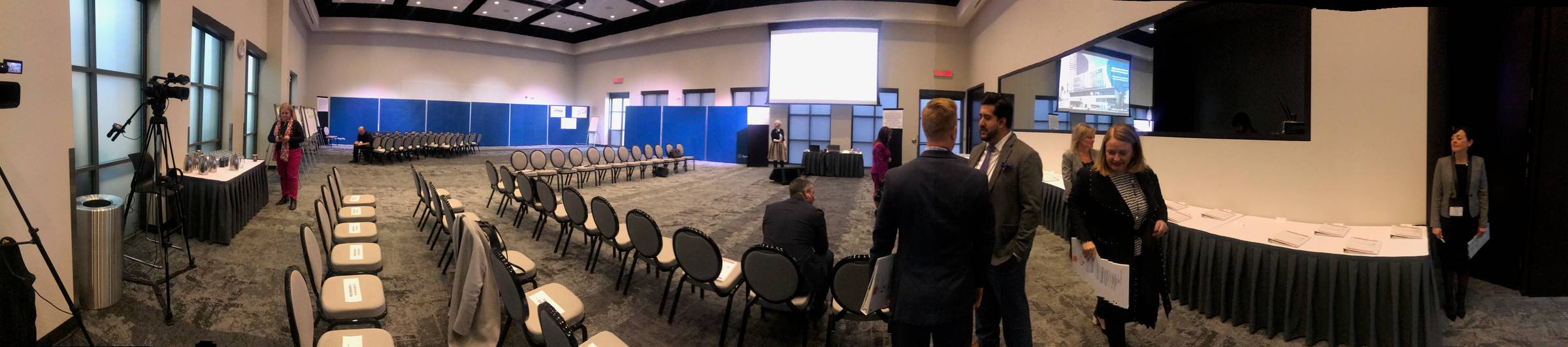
The session surfaced tensions across silos and created a common language where competing vocabularies had existed, building shared purpose for getting the employee experience right.
Lynn's provocation to her peers was straightforward:
If we don't know what's getting in their way in the current workplace, how can we deliver a better experience when we design the new one?
To validate the strategy, Lynn proposed a new survey focusing on topics the annual engagement survey omitted, e.g., manager care for worker experience, workplace impact on collaboration, and work flexibility.
Lynn encountered some resistance from her HR colleagues. Was it fair to ask about the workplace when leaders had limited control over it? Lynn pushed ahead, believing most of the daily experience happens outside HR’s traditional engagement survey remit, and needed to be measured directly.
"How would I know if people were collaborating if I didn't ask?"
Transformation often means pushing against inertia, and Lynn took a calculated risk after consulting her external transformation network.
The Workplace Experience Survey quickly became a driver for real accountability. Janet told me the results shaped executive scorecards, and set expectations for how work would get done differently.
As a result, asking "how will employees experience this?" became a standard practice.
Changing behaviors and habits requires more than new furniture; leaders must be willing to model the change.
Shopping for Workplace Change
BMO Place was designed to be a forcing function for change. The bank consolidated 3,200 employees from scattered locations into 350k sqft of renovated department store space in downtown Toronto.
Lynn said the move criteria was simple:
- Do you need to collaborate with new groups and stakeholders?
- Would outcomes improve if you were in proximity?
If "yes," then you're a candidate for BMO Place. But if you work here, you will be working differently.
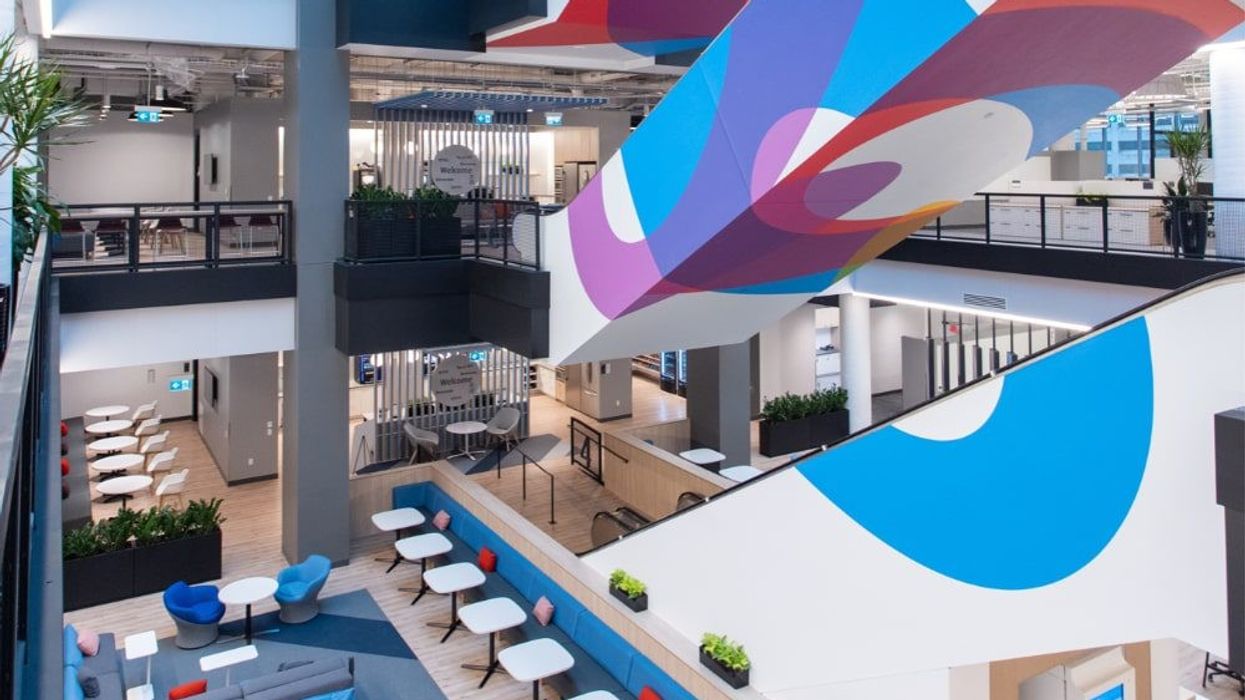
The former mall space was challenging to convert but created incredible opportunities for visibility and serendipity.
George Della Rocca, BMO’s head of CRE (then and now) said:
The floors are so big we treated them like a university campus. You can see people on the escalators...and see people on upper floors.
This is an office with a purpose; collaboration became unavoidable while leadership measured whether it worked.
Learn in Moments, Not Monuments
These transformations are temporal. They depend on sponsorship, budget, and someone who can orchestrate across silos. This is the key person risk that rarely shows up in change management frameworks.
BMO didn't call Lynn’s role the "Chief of Work.” But she integrated HR, IT, and CRE around a single obsession: how will employees experience this?
Most organizations facing the same challenges form committees. Schedule monthly meetings. Create steering groups. Nothing changes.
BMO gave someone a deliberately ambiguous mandate, backed it with authority, forced collision through space and measurement, and insisted behavior change was non-negotiable.
We spend enormous energy predicting the future of work while forgetting to study the moments when someone actually broke down silos.
Those stories exist all around us, buried in LinkedIn profiles and abandoned org charts.
The "Chief of Work" isn't new; people have been doing this work under different titles all along. Time to start learning from them.
What can you do on Monday?
Borrow Lynn's playbook:
- Interview 5 leaders and ask: "What's getting in your way?"
- Identify one process HR, IT, and CRE all touch but nobody owns
- Check if you're measuring collaboration or EX outcomes, or just mandating them

Help me find the next Lynn Roger. If you know a leader doing integrated workplace transformation work (successfully or messily), send me their name. These stories are too good to stay buried in LinkedIn profiles.
Lead Across the Lines of Modern Work with Phil Kirschner
Over 22,000 professionals follow my insights on LinkedIn.
Join them and get my best advice straight to your inbox.