
The Power of Contextual AI in Human Resources

Contextual AI connects HR data into real insight, helping teams predict risks, personalize experiences, and make smarter decisions at scale.
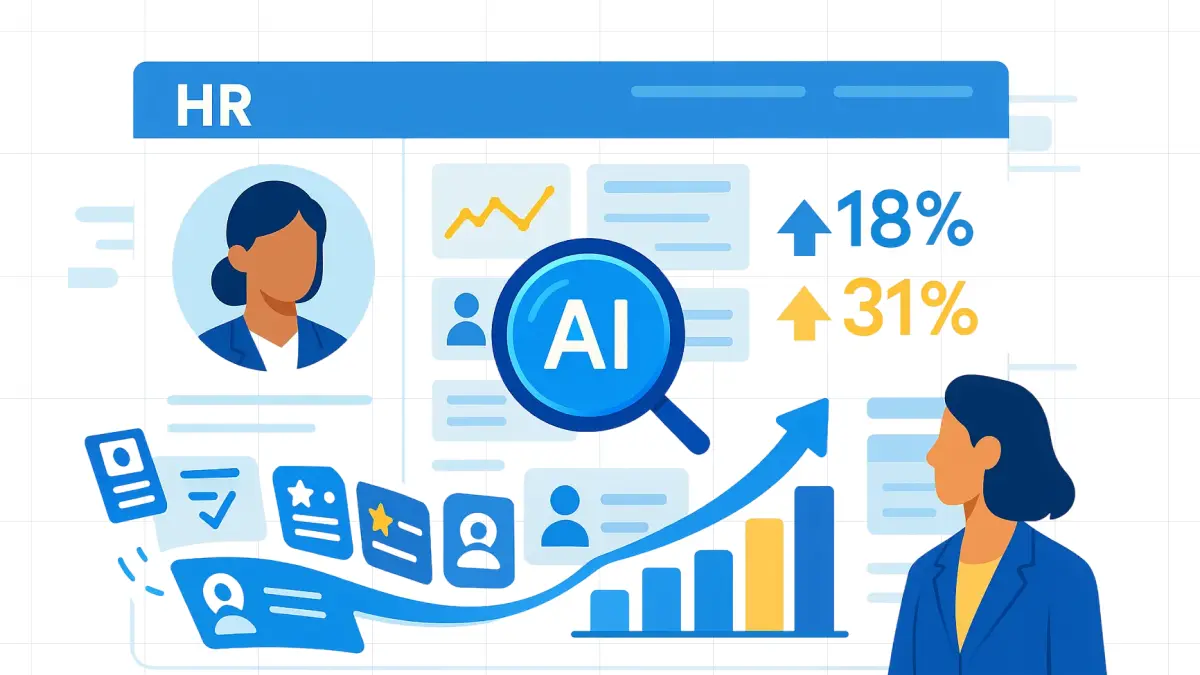
As we navigate the rapidly evolving HR tech landscape, I've been thinking about a game-changer to revolutionize how we understand and manage our workforce: contextual AI for people analytics.
This isn't just another buzzword - it's a paradigm shift that has the potential to transform HR from a support function to a strategic powerhouse driving business value.
Let's look at the numbers:
- 74% of companies believe AI will be critical for digital HR transformation in the next 1-3 years (Deloitte)
- Organizations using AI in HR see 18% higher revenue per employee and 31% higher profit per employee (IBM)
- By 2025, over 75% of HR leaders will use AI for talent management and workforce planning (Gartner)
These stats are mind-blowing, but what does contextual AI mean for HR?
It's about connecting all those "digital breadcrumbs" your employees leave behind - from performance reviews to engagement surveys to recruitment data.
Imagine having a supercharged co-pilot for your HR strategy that can spot patterns and generate insights you'd never uncover manually.
AI in HR Today
with Anthony Onesto
Subscribe for exclusive insights from Anthony Onesto, Chief People Officer at Suzy, and learn how AI is reshaping HR, enhancing employee engagement, and driving business success.
TOGETHER WITH
The Foundation: Unified People Data
The first step towards unleashing the power of contextual AI is bringing all your people data together.
We're talking about core HR data, performance management information, recruiting data, engagement surveys, compensation data, and learning records.
We create a comprehensive digital footprint for each employee by consolidating these data streams. This unified data foundation is what enables AI to work its magic.
With this unified data foundation, we can apply AI and machine learning algorithms to uncover patterns and generate actionable insights.
Here are some key capabilities of contextual AI in people analytics:
- Predictive Modeling: Forecast attrition risk, performance potential, and more.
- Natural Language Processing (NLP): Analyze vast amounts of unstructured text data from surveys and feedback.
- Anomaly Detection: Flag unusual patterns in metrics like compensation or engagement.
- Recommendation Engines: Suggest personalized learning content or career paths.
Real-World Applications of Contextual AI in HR
Let's move from theory to practice. How can organizations use contextual AI to drive value?
- Performance Management: AI can analyze feedback patterns, nudging managers to provide more specific or balanced input. It can also identify high performers who may be flight risks based on subtle changes in their engagement.
- Compensation: By correlating performance ratings, skills data, and market benchmarks, AI can recommend appropriate salary adjustments and flag potential pay equity issues.
- Recruiting: AI can analyze the attributes of your top performers to optimize candidate sourcing and selection processes.
- Employee Experience: AI can continuously analyze feedback from various sources to uncover emerging concerns or opportunities to improve engagement.
Contextual AI enables HR to make data-driven decisions, personalize the employee experience, proactively address issues, optimize resource allocation, and demonstrate strategic value to the business.
Challenges and Considerations
Implementing contextual AI has its challenges. Here are some key considerations:
- Data Privacy and Security: We need robust systems and policies to protect privacy and ensure compliance with regulations.
- Algorithmic Bias: We must be vigilant about potential biases in our algorithms and take steps to ensure fairness and equity.
- Change Management: Implementing contextual AI often requires significant changes to processes and mindsets.
- Skills Gap: HR teams need new skills in data analysis, AI/ML, and strategic thinking.
- Maintaining the Human Touch: As we embrace AI, we must keep sight of the 'human' in Human Resources.
The Future of HR: Playing the Long Game
As we look to the future, contextual AI will play a pivotal role in shaping the HR and Worktech landscape.
But this isn't just about adopting new technology—it's about fundamentally rethinking how we approach people management.
The HR leaders who will thrive in this new era are those who can blend data-driven insights with human intuition and empathy.
We must become storytellers, translating complex AI outputs into compelling narratives that drive action.
We need to be strategic partners, using our unique understanding of people and culture to guide the ethical implementation of AI in our organizations.
This shift requires us to play the long game.
We must invest in building our data foundations, upskilling our teams, and reimagining our processes.
But the potential rewards - business impact, employee experience, and strategic influence - are enormous.
How can you start leveraging contextual AI in your organization?
AI in HR Today
with Anthony Onesto
Subscribe for exclusive insights from Anthony Onesto, Chief People Officer at Suzy, and learn how AI is reshaping HR, enhancing employee engagement, and driving business success.