

Gallup's 2026 data puts global employee engagement at 21%. One in five people is genuinely in it. The rest are physically present, professionally functional, and emotionally somewhere else entirely.
We tend to blame the system: overwork, unclear expectations, lack of recognition. Those things are real. But there's a step most leaders skip before any systemic fix is possible: their own experience of the work.
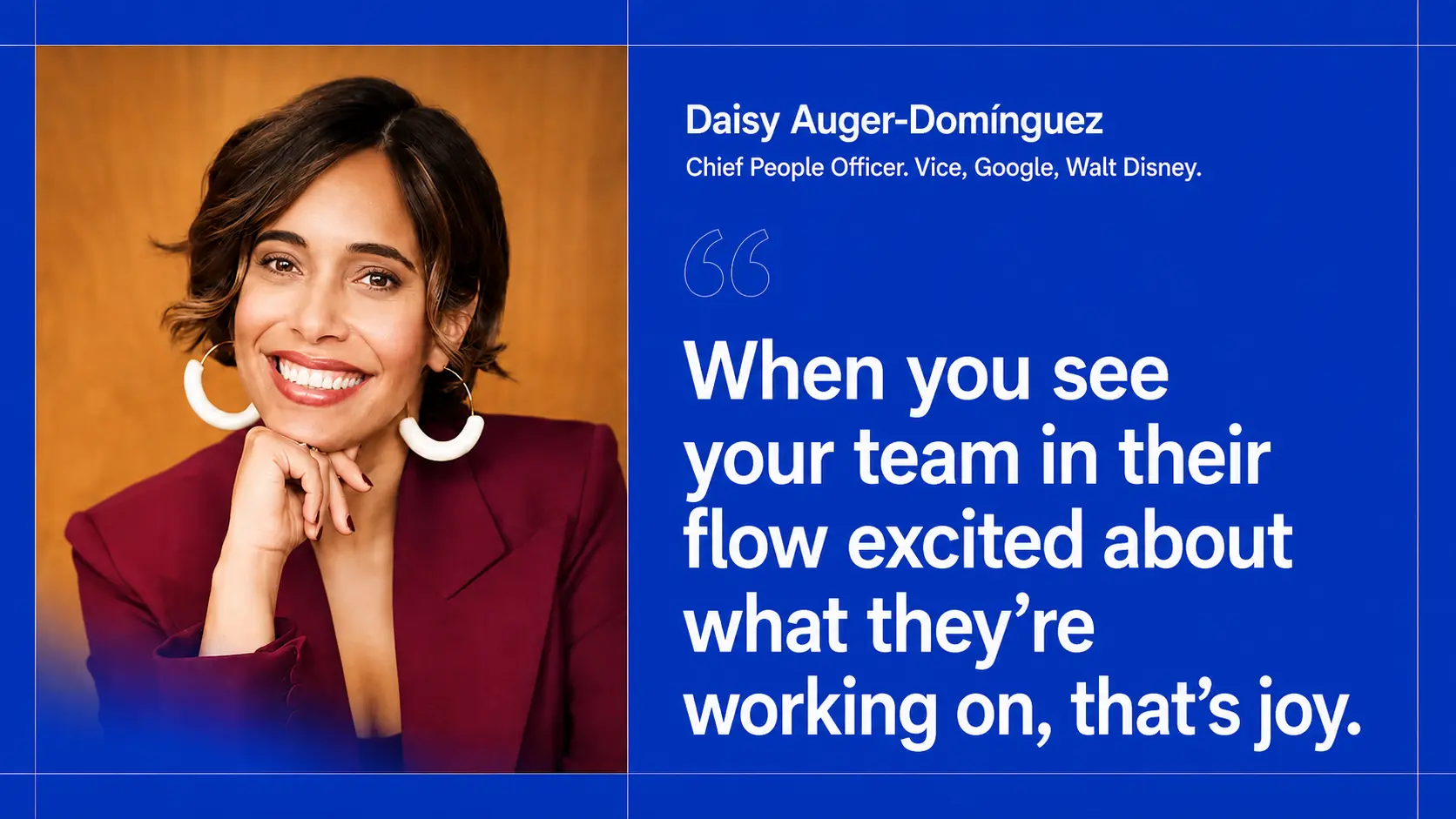
Daisy Auger-Dominguez is Chief People Officer at fintech startup Digital Asset, formerly at Google, Disney, and Vice.
In a conversation with HBR IdeaCast, she makes an argument worth sitting with: managers who have lost their joy will spread that loss, usually faster than they realize. Conversely, managers who have found it (genuinely, not performatively) can change a team's entire tenor, and that dynamic runs in both directions.
What Joy Actually Means at Work
Auger-Dominguez is careful to separate joy from happiness. Happiness is a mood. It depends on the meeting going well, on getting the recognition, on a good week.
Joy is something more structural. She defines it as deep, sustaining satisfaction: the energy that comes from meaningful connection, from seeing your team in flow, from doing work that aligns with what you actually care about. It doesn't disappear when the quarter gets hard.
The question she asks every leader she coaches: What is your best and highest use?
Not "what's on your job description." What are the skills and the work that, when you're engaged in them, make your energy go off the charts? The things you can do for hours without noticing the time. Leaders who don't have a clear answer to that question tend to drift, filling their days with activity that isn't rooted in any genuine sense of contribution.
The Manager in the Middle
Middle managers are in a structurally difficult position, and we don't talk about it clearly enough.
Pressure comes from above: strategy shifts, unclear mandates, changing priorities. Pressure comes from below: team members who need support, clarity, and recognition. Peers rarely provide solidarity or cover.
When that accumulates, it doesn't usually produce a clean breakdown. It produces something slower and harder to see: a growing cynicism, a short fuse, a creeping fear that slows decision-making and creativity. And then it spreads.
The manager who rushes into a meeting visibly bothered? Everyone feels it within thirty seconds. The laughter that was there before disappears. The room gets tighter and more anxious. Most people reading this have been in that meeting dozens of times.
What Auger-Dominguez is arguing is that managing your own inner state is not separate from managing your team. It is the first layer of it.
It's a point Denise Brouder, founder of the Future of Work Alliance, made directly when we spoke with her: "They may not set company policy, yet they set the tone every day." Culture doesn't live in value statements or all-hands decks. It lives in the everyday interactions between a manager and their people.
The Burnout Trap
There's a peculiar problem with burnout as a concept: talking about it relentlessly can reinforce it. The more we inventory everything that's wrong and exhausting, the more entrenched the story becomes.
Auger-Dominguez suggests a different angle. Not dismissing the systemic causes (overwork, under-resourcing, lack of information), which are real and need addressing. But asking a prior question: What do I have agency over right now? What can make this moment, this meeting, this interaction slightly lighter?
The systemic problems don't disappear by reframing them. But when you're in the middle of a run of difficult weeks, waiting for the system to fix itself is not a strategy. Working with what you actually control is.
This connects to something the FlexOS framework for happiness at work keeps returning to: meaning at work is not primarily something the organization delivers to the employee. It's something the leader cultivates actively, first in themselves, then outward.
Also available on:


Your Friday Briefing on the
Future of Work
Future Work delivers research-backed insights, expert takes, and practical prompts—helping you and your team capture what matters, build critical skills, and grow into a future-ready force.
Get all-in-one coverage of AI, leadership, middle management, upskilling, DEI, geopolitics, and more.
Unsubscribe anytime. No spam guaranteed.

Stay Ahead in the Future of Work
Get AI-powered tips and tools in your inbox to work smarter, not harder.
Get the insider scoop to increase productivity, streamline workflows, and stay ahead of trends shaping the future of work.
Unsubscribe anytime. No spam guaranteed.

Stay Ahead in the Future of Work
Leading in the future of work is a breeze with FlexOS. Subscribe to our newsletters and stay ahead on AI, Remote Work, and Modern Management.
We curate the most current research, news, trends, and tools to let you work smarter, not harder.
What This Looks Like in Practice
Auger-Dominguez offers several concrete practices. None of them require a budget, a policy change, or a new initiative.
Find your Ikigai. The Japanese concept translates roughly as "a reason for being": the intersection of what you love, what you're good at, what the world needs, and what sustains you. Applied to work, the question becomes: when are you most alive in this role? What would you be doing if nobody was measuring it?
Embrace beginner's mind. Expertise is valuable, but it narrows the aperture. Managers who know exactly how something should go tend to close off possibilities before examining them. Auger-Dominguez describes coaching a senior manager who immediately dismissed a new project as a waste of time. Fifteen minutes of genuine questioning later, his whole posture had shifted. Not because the project had changed, but because he had looked at it differently.
Build a happy folder. Collect the notes, the moments, the feedback that reminded you your work mattered. Not for ego, as data. When you're in a stretch where nothing seems to be landing, that folder is a corrective. One of Auger-Dominguez's clients described it as "data that matters": evidence, from your own experience, that the work has been real.
Show up intentionally to every meeting. Two or three minutes before a difficult meeting, asking yourself how you want to show up changes the meeting. The energy you walk in with is the energy you spread. This is one of the highest-leverage things a leader can actually control.
Open every one-on-one with a real question. Auger-Dominguez cites a line from executive coach Zander Grashow: "Do you need me to witness, help, or distract you right now?" That question gives the other person agency over the conversation before it begins, shifting the frame from "here's the agenda" to "what do you actually need?"
Spreading It
If there's a core claim in Auger-Dominguez's argument, it's this: joy is contagious in both directions.
Simon Sinek's framing, which she quotes, gets at something important: helping ourselves produces moments of happiness, but helping others produces lasting fulfillment. The managers who have the most durable satisfaction in their work are rarely the ones who've optimized their own experience. They're the ones who've found something that matters in the development and wellbeing of the people around them.
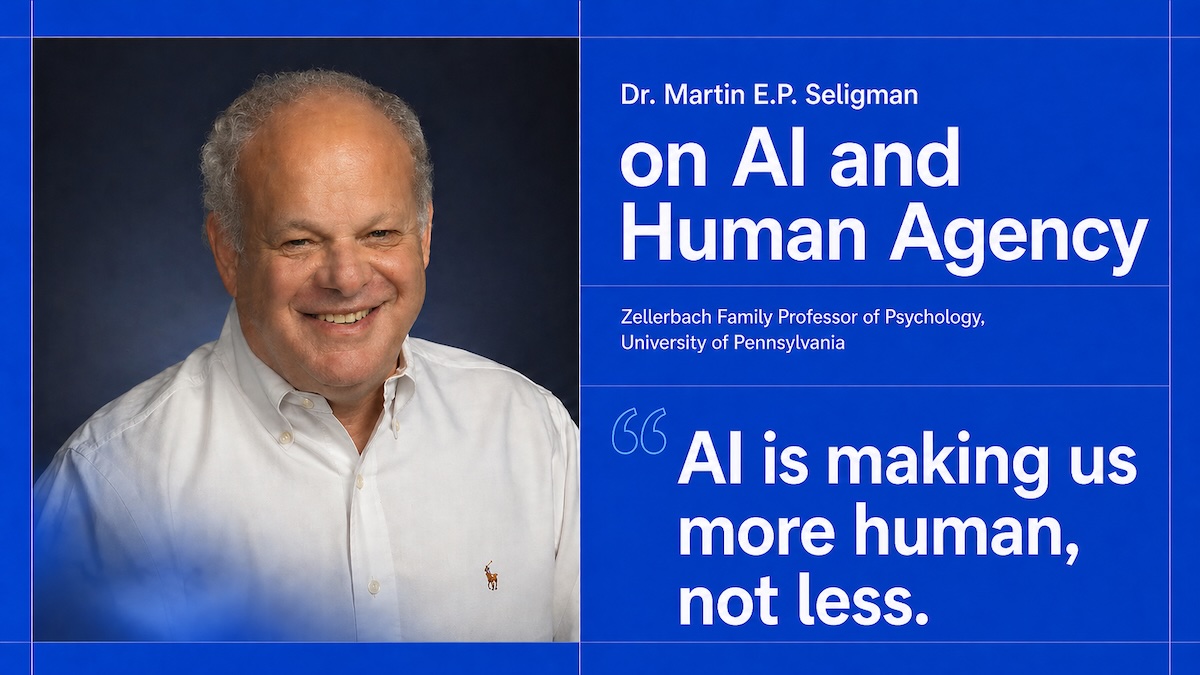
That's a different motivation than performance management. It's closer to what meaning researchers like Martin Seligman would call contribution: one of the more stable foundations for flourishing, precisely because it doesn't depend on external recognition to stay alive.
The data makes the case plainly. In a conversation with Debbie Lovich, Managing Director at BCG, she shared proprietary BCG research showing that employees who enjoy their work are twice as likely to stay: the share not actively looking for a new job jumps from the low 30s to the low 70s.
When BCG then correlated dozens of factors against intention to stay, the top drivers were all emotional: feeling respected, valued, supported, and satisfied with their manager. Pay dropped to fifteenth. The manager's joy, and the culture it produces, is not a soft variable.
Knowing when it's working is also simpler than most leaders expect. It's not in the output numbers, though those matter. It's in the interpersonal texture of the team. Are tensions decreasing? Is collaboration getting easier? When something urgent comes up, do people lean in or step back?
When teams are functioning at that level, people stay not because they're obligated to, but because they feel genuine ownership over what they're building together. That's engagement as a lived experience, which is what we're actually after.
The Implication for Leaders
FlexOS starts with the leader because nothing else holds if the leader isn't grounded. That's not a motivational claim. It's a structural one. The team's capacity for meaning, safety, and genuine engagement runs through the leader's own relationship with the work.
Auger-Dominguez's framework is useful because it doesn't ask leaders to manufacture feelings they don't have. It asks them to do the inquiry: what does the work mean to you? Where is your best and highest use? What have you forgotten about why you started?
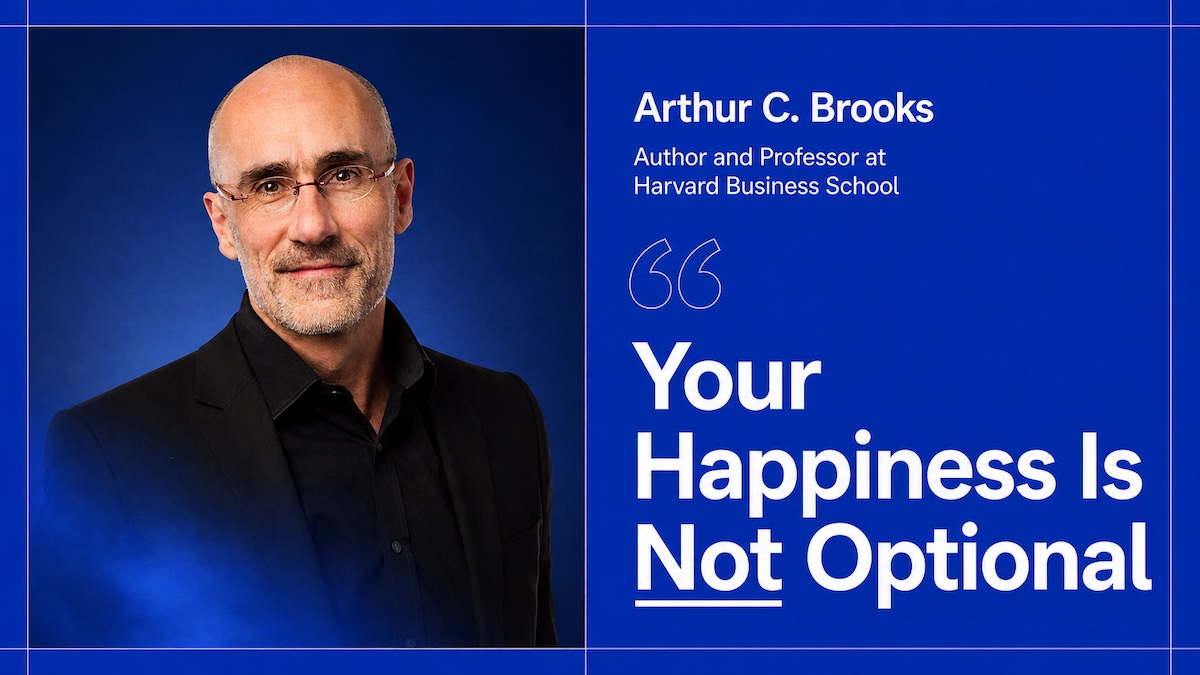
Arthur C. Brooks has explored why this inquiry is especially urgent for high-achieving leaders, and why the most accomplished people are often the least equipped to answer it. That piece is worth reading alongside this one.
Those are not soft questions. They're the foundation of everything that follows.
FAQ
Is joy the same as happiness at work?
No. Auger-Dominguez distinguishes them clearly: happiness is a fleeting emotional state; joy is a deeper, more durable form of satisfaction rooted in purpose, connection, and meaningful contribution. Leaders who pursue joy rather than happiness build something more resilient.
Why do middle managers struggle most with finding joy at work?
Middle managers absorb pressure from above and below simultaneously, often with limited resources, recognition, or clarity. This structural squeeze creates conditions for chronic burnout that senior leaders and individual contributors don't experience in the same way.
Can a manager's emotional state really affect their whole team?
Yes, and faster than most leaders realize. Research consistently shows that emotional states spread within teams: a manager who walks into a room anxious or frustrated shifts the room's dynamics within minutes, even without saying anything directly about it.
What is Ikigai and how does it apply to management?
Ikigai is a Japanese concept meaning "reason for being": the overlap of what you love, what you're good at, what the world needs, and what sustains you. Applied to leadership, it's a framework for identifying the work that produces genuine energy rather than just activity.
How do you know if a team is experiencing joy, not just performing it?
Look at the interpersonal texture: declining tensions, easier collaboration, people stepping up when things get hard. Joy shows up in behavior, not in survey scores. When people feel genuine ownership over the work, they stay, contribute, and cover for each other, not because they're told to, but because they want to.
What's the first step a manager should take if they've lost their sense of joy?
Start with the question Auger-Dominguez uses with every coaching client: what is your best and highest use? Not your job description. What work produces energy in you rather than draining it? That answer is where the rebuild begins.
Your Friday Briefing on the
Future of Work
Future Work delivers research-backed insights, expert takes, and practical prompts—helping you and your team capture what matters, build critical skills, and grow into a future-ready force.
Get all-in-one coverage of AI, leadership, middle management, upskilling, DEI, geopolitics, and more.
Unsubscribe anytime. No spam guaranteed.
Stay Ahead in the Future of Work
Get AI-powered tips and tools in your inbox to work smarter, not harder.
Get the insider scoop to increase productivity, streamline workflows, and stay ahead of trends shaping the future of work.
Unsubscribe anytime. No spam guaranteed.
Stay Ahead in the Future of Work
Leading in the future of work is a breeze with FlexOS. Subscribe to our newsletters and stay ahead on AI, Remote Work, and Modern Management.
We curate the most current research, news, trends, and tools to let you work smarter, not harder.


.webp)

![[Research Report] Rethinking the Workweek: The Push for Fewer Work Hours, More Life](https://cdn.prod.website-files.com/6442419dcf656a81da76b503/67f62ad0c3f263946ab76bf6_67eb9ea7f1a4e15aa02357f9_67dbcc5cd852e0468b7c1ab5_67d9294873eb0f3d06db0522_67d3e3773b52fb1458bbeca9_67cfeef562a442c6b5cac417_67ce9d783f83a316431e99fb_67c805f1e959c187503b6f9a_67c6b466f85f6718abc84402_67c562f18bb2e90006fefb91_67c01ccf46d56e67e92b4a6c_67becb6ce25a88249e237189_67b590c86adb9081bf7caffb_67a31bbd70980f65543d6140_6790a675ad20d4456fda7112_678f83dd8d45ccd6bdcc0504_Rethinking-the-workweek.avif)


![[Report] The Top 100 AI for Work – March 2024](https://cdn.prod.website-files.com/6442419dcf656a81da76b503/670defe3518d73b50509fa03_6708cccc5300ba0a7c209e41_news-top-100-ai-for-work-march-2024.avif)